
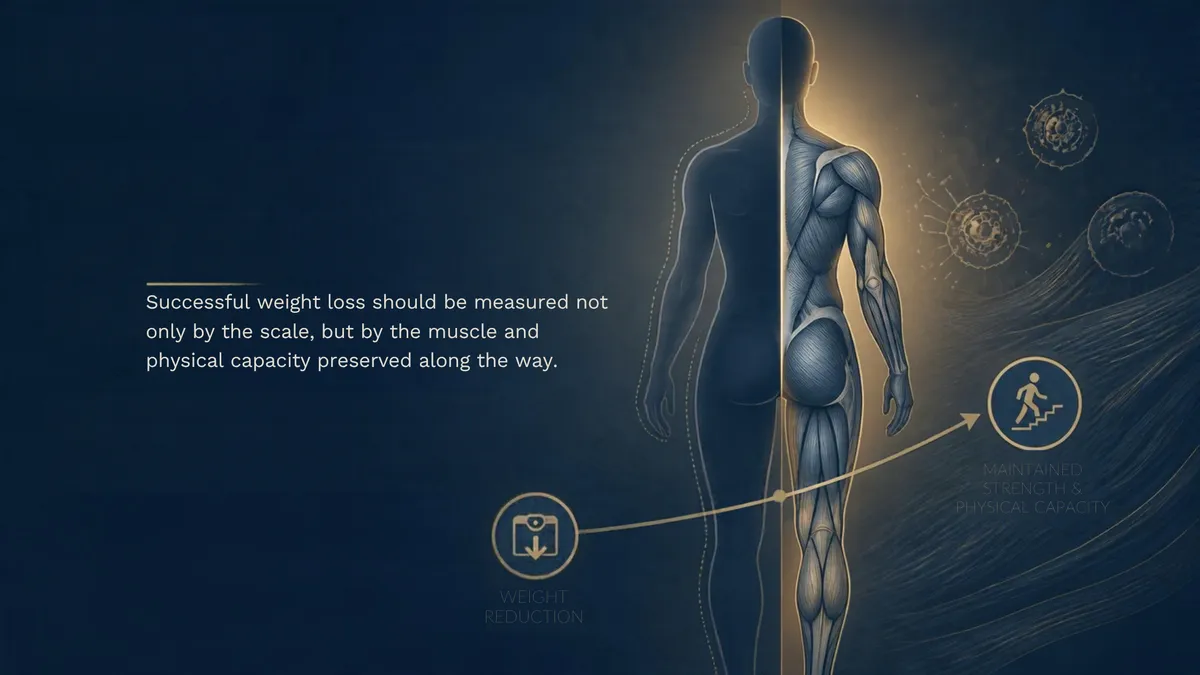
GLP 1s, Sarcopenia, and Why Muscle Is the Organ of Longevity
GLP 1 based therapies have fundamentally changed the treatment of obesity. Semaglutide, tirzepatide, and related therapies have allowed many appropriately selected patients to achieve clinically meaningful weight loss that was previously difficult to sustain through lifestyle intervention alone.
That is a significant advance in medicine.
But the success of these therapies also creates an important question: When someone loses a substantial amount of weight, what exactly are they losing?
The bathroom scale cannot answer that question.
A 30 pound reduction in body weight does not mean 30 pounds of fat disappeared. Significant weight loss generally includes reductions in fat mass as well as some lean tissue. This occurs with pharmacologic therapy, caloric restriction, and other methods of substantial weight reduction.
A 2026 systematic review and meta analysis of 20 randomized trials involving 15,782 participants found that lean mass represented approximately 25 to 39 percent of total weight lost with incretin based therapies. Importantly, the proportion of lean mass lost was broadly comparable with lifestyle based weight loss. Lifestyle intervention combined with resistance training demonstrated better lean mass preservation.
That distinction is critical.
The message should not be that GLP 1 therapies are destroying muscle. Current evidence does not support such a simplistic conclusion. The better message is that substantial weight loss makes muscle too important to ignore.
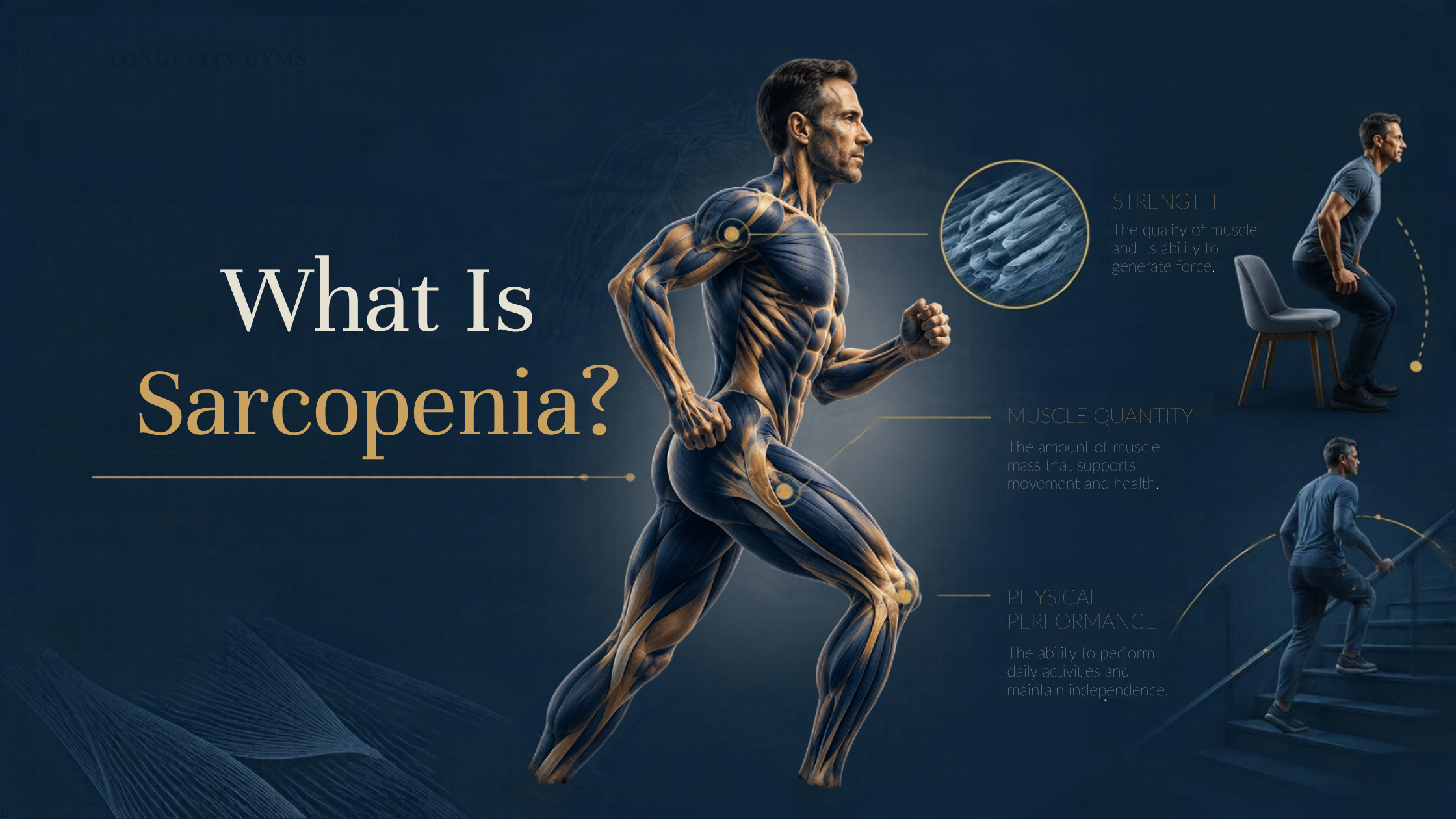
What Is Sarcopenia?
Sarcopenia is characterized by deterioration in skeletal muscle strength, quantity, and physical performance. It becomes increasingly prevalent with age and can be influenced by physical inactivity, inadequate nutrition, chronic disease, and other factors.
Importantly, sarcopenia is not simply having “less muscle.”
Modern clinical definitions place considerable emphasis on muscle strength and physical performance because the amount of muscle someone carries does not completely describe how well that muscle functions.
The consequences are significant. Sarcopenia has been associated with frailty, functional decline, falls, disability, hospitalization, and mortality.
A 2026 systematic review and meta analysis involving more than 76,000 community dwelling older adults found that sarcopenia was associated with approximately 79 percent higher odds of all cause mortality and 90 percent higher odds of functional decline.
Another meta analysis involving nearly 900,000 participants found that muscle wasting was associated with higher risks of all cause, cardiovascular, cancer, and respiratory mortality.
These are observational associations and should not be interpreted as evidence that muscle mass alone determines lifespan. They do, however, demonstrate why muscle health deserves a much larger role in conversations about longevity.
Why Call Muscle the “Organ of Longevity”?
Skeletal muscle is sometimes discussed as though its primary purpose is strength or appearance.
Physiologically, it is much more interesting.
Skeletal muscle is a large, metabolically active tissue involved in movement, glucose disposal, insulin sensitivity, energy metabolism, amino acid storage, physical function, and communication with other tissues through signaling molecules released during muscular activity.
It also represents something particularly important as we age: physical reserve.
You need muscle to stand from a chair, climb stairs, carry groceries, lift luggage, maintain balance, recover from a misstep, exercise, and continue performing the ordinary physical tasks that support independence.
This is why referring to skeletal muscle as an “organ of longevity” can be useful, provided we understand the phrase correctly.
Muscle does not determine longevity by itself. There is no single organ, biomarker, hormone, or test that does.
But preserving muscle and, equally importantly, preserving muscle function are fundamental to maintaining physical capacity across the lifespan.
The GLP 1 Conversation Needs More Nuance
There are two extremes emerging around GLP 1 therapies.
One treats weight loss as the only outcome that matters.
The other suggests that GLP 1 therapies inherently cause dangerous muscle wasting.
Neither position adequately reflects the evidence.
Recent reviews acknowledge reductions in lean mass during GLP 1 associated weight loss, but whether these therapies independently increase the risk of clinical sarcopenia remains debated. A 2026 review focused on populations at higher risk concluded that hard evidence demonstrating a significantly increased risk of sarcopenia attributable to GLP 1 based therapies remains limited. Older adults and people with certain chronic conditions may warrant particular attention because their baseline risk for sarcopenia is already higher.
This distinction matters because lean mass is not synonymous with skeletal muscle, and a reduction in measured lean mass does not automatically mean someone has developed sarcopenia.
Lean mass measurements can include water, organs, connective tissue, glycogen associated water, and skeletal muscle. Changes in hydration and body size can therefore influence measured lean mass during substantial weight reduction.
Sarcopenia also involves function, particularly strength and physical performance.
The scientifically responsible approach is therefore not to assume that GLP 1 therapy causes sarcopenia.
It is to recognize that meaningful weight loss creates a reason to pay attention to muscle.
A Lower Number on the Scale Is Not the Entire Goal
Consider two people who each lose 40 pounds.
Both have achieved substantial weight reduction. Both may experience meaningful improvements in metabolic health.
But their physical trajectories could be different.
One person may have been resistance training, consuming adequate nutrition, remaining physically active, and preserving a favorable amount of skeletal muscle.
Another may have dramatically reduced caloric intake while becoming less physically active and losing more muscle and strength along the way.
The scale records the same 40 pound reduction.
It cannot distinguish between those scenarios.
This is why modern weight management should evolve beyond simply asking how much weight someone has lost.
We should also be asking how body composition changed and whether physical capacity is being maintained.
Resistance Training Becomes More Important, Not Less
Weight loss reduces the amount of body mass someone carries every day. For many people, that improves mobility and makes exercise substantially easier.
That creates an opportunity.
Resistance exercise provides a direct stimulus to skeletal muscle and is one of the primary strategies used to maintain or improve strength and muscle during weight loss.
The 2026 meta analysis comparing incretin therapy with lifestyle interventions is particularly relevant here. While proportional lean mass loss was broadly comparable between incretin based pharmacotherapy and lifestyle intervention, programs incorporating resistance training demonstrated better lean mass preservation.
This does not mean every patient taking a GLP 1 medication should immediately begin an aggressive strength program. Exercise recommendations need to reflect age, baseline fitness, orthopedic limitations, cardiovascular status, medical history, and other individual considerations.
The broader principle is straightforward.
If body weight is decreasing, skeletal muscle should still receive a reason to remain.
Nutrition Matters Too
Reduced appetite is one of the mechanisms that makes GLP 1 based therapy effective. For some individuals, however, a significant reduction in appetite can also make adequate nutritional intake more challenging.
Protein intake becomes particularly relevant because dietary protein provides the amino acids required for muscle protein synthesis.
The appropriate amount of protein varies according to body size, age, activity level, kidney function, overall health, weight loss strategy, and other clinical factors. It would therefore be inappropriate to prescribe one universal protein target in a general article.
The principle is more important than a generic number.
A successful weight management strategy should consider not only energy reduction but also nutritional adequacy, physical activity, resistance training, and preservation of functional tissue.
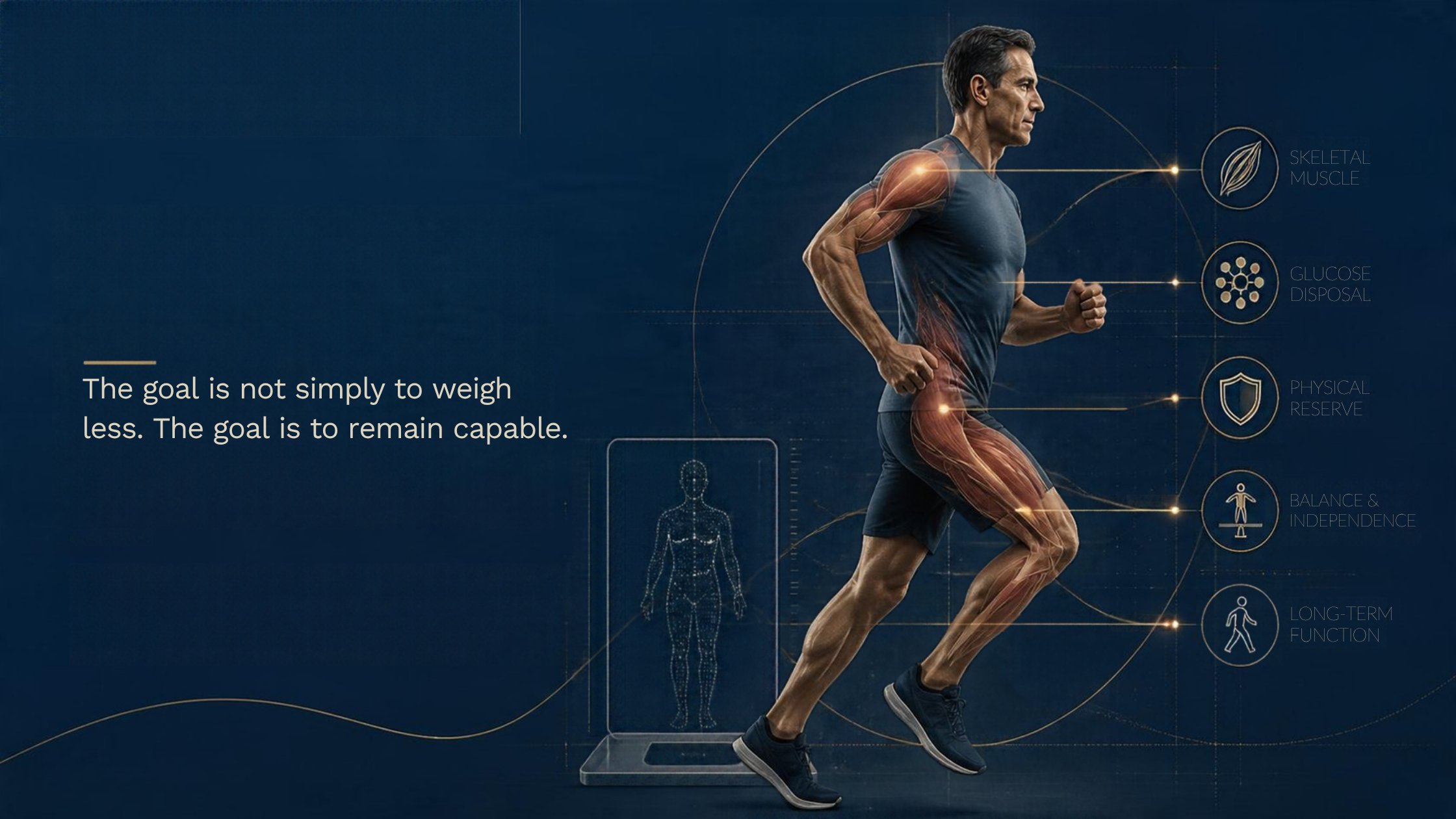
The goal is not simply to make the body lighter.
It is to improve health while maintaining the physical assets that will matter later.
Muscle Becomes More Important With Age
The muscle conversation becomes especially relevant in midlife and older adulthood.
Age related changes in muscle begin well before someone appears frail. Muscle mass can decline gradually, but strength and power may decline even more substantially.
That creates a problem when significant weight loss occurs in someone who already has relatively limited muscle reserve.
An individual with obesity can also have low muscle mass or impaired muscle function. This coexistence is referred to as sarcopenic obesity.
Looking at body weight alone can therefore be misleading. Someone can carry excess adipose tissue while simultaneously having inadequate skeletal muscle relative to their physical needs.
This is one reason a lower BMI should not automatically become the sole objective of weight management, particularly as people age.
The quality of the tissue behind the number matters.
Measuring Muscle Before There Is a Problem
One of the limitations of traditional weight management is that body composition is often considered only after someone has already lost a significant amount of weight.
There is a better opportunity.
Establish a baseline.
If someone is beginning medically supervised GLP 1 therapy or another significant weight loss intervention, measuring body composition early provides a reference point.
How much skeletal muscle is present?
How much body fat?
How much visceral fat?
How is lean mass distributed?
Repeat measurements can then provide information about how those variables change as total body weight decreases.
Bioelectrical impedance analysis does not diagnose sarcopenia and should not be presented as though it does. Sarcopenia requires a broader evaluation that incorporates muscle strength and physical performance.
But body composition testing can provide valuable information about skeletal muscle that a bathroom scale cannot.
The Goal Is Not Maximum Muscle
Preserving muscle does not mean everyone needs to become a bodybuilder.
The objective is adequate muscle and function for the demands of the individual.
For an athlete, that may involve performance.
For someone in midlife, it may mean maintaining strength while losing excess adiposity.
For an older adult, it may mean preserving the ability to climb stairs, travel, lift objects, recover balance, and remain independent.
Different goals require different levels of performance.
The common denominator is maintaining enough physical capacity to continue doing the things that matter.
That is a much more meaningful longevity objective than simply achieving the lowest possible number on a scale.
GLP 1 Therapy Can Create an Opportunity
The muscle conversation should not overshadow the benefits of successful obesity treatment.
Obesity is associated with significant health risks, and GLP 1 based therapies have become valuable tools for appropriate patients.
Substantial weight reduction may improve mobility, metabolic health, cardiovascular risk factors, and the ability to exercise. For someone who previously struggled to move comfortably, losing significant excess weight can make physical training more accessible.
That creates an important opportunity.
Weight loss can become the beginning of rebuilding physical capacity rather than the end of the process.
The question shifts from:
How much weight can we lose?
to:
What kind of body are we building as the weight comes off?
That is where muscle belongs in the modern weight management conversation.
Muscle Is an Asset Worth Tracking
Longevity medicine has become fascinated with increasingly sophisticated measurements. We discuss biological age, hormones, peptides, genomic data, inflammatory markers, glucose monitoring, and emerging therapeutics.
Those conversations have value.
But we should not become so interested in molecular optimization that we overlook one of the largest modifiable tissues in the human body.
Skeletal muscle is measurable.
It is trainable.
It contributes directly to physical capability.
And losing it gradually can have meaningful consequences as we age.
This is why Longevity Gyms places such a strong emphasis on muscle as part of body composition and physical capacity.
Measure Muscle, Not Just Weight
At Longevity Gyms, InBody body composition analysis allows us to look beyond the number on the scale and establish measurements related to skeletal muscle mass, body fat, visceral fat, and segmental lean mass.
For someone beginning or currently undergoing medically supervised GLP 1 therapy, body composition testing can establish a baseline and provide objective information to follow as weight changes.
The purpose is not to create fear around muscle loss.
It is to make sure muscle is being measured at all.
GLP 1 therapies have given medicine a powerful tool for treating obesity. The next evolution of weight management should be making sure successful weight reduction is accompanied by equal attention to the physical capacity we want to preserve.
Because the goal is not simply to weigh less.
The goal is to remain capable.
Explore InBody Body Composition Testing
Learn how Longevity Gyms measures skeletal muscle, body fat, visceral fat, and body composition.

Medical Disclaimer
This article is provided for educational and informational purposes only and is not intended to provide medical advice, diagnosis, or treatment. GLP 1 based medications and other prescription weight management therapies require individualized medical evaluation, prescribing, and ongoing clinical oversight. Body composition testing does not diagnose sarcopenia and is not a substitute for medical evaluation, muscle strength assessment, physical performance testing, or individualized nutritional and exercise recommendations. Individuals should consult an appropriately qualified healthcare professional regarding medications, weight management, nutrition, exercise, or concerns about muscle loss.
Selected References
Lean Mass Changes With Incretin Therapy Versus Lifestyle Intervention: A Systematic Review and Meta Analysis of Randomised Controlled Trials. Diabetes, Obesity and Metabolism. 2026. The analysis included 20 randomized trials and 15,782 participants and found meaningful lean mass reductions during significant weight loss, with resistance training associated with greater lean mass preservation.
Scheen AJ. GLP 1 Derived Therapies and Sarcopenia: Plea for a Specific Focus on At Risk Special Populations. Diabetes & Metabolism. 2026;52(1):101708.
Zhao et al. Long Term Impact of Sarcopenia on Functional Decline and Mortality in Community Dwelling Older Adults: A Systematic Review and Meta Analysis. 2026.
Association of Muscle Wasting With Mortality Risk Among Adults: A Systematic Review and Meta Analysis of Prospective Studies. Journal of Cachexia, Sarcopenia and Muscle. 2023.
Coelho Júnior HJ, et al. Low Muscle Mass in Older Adults and Mortality: A Systematic Review and Meta Analysis. Experimental Gerontology. 2021.