
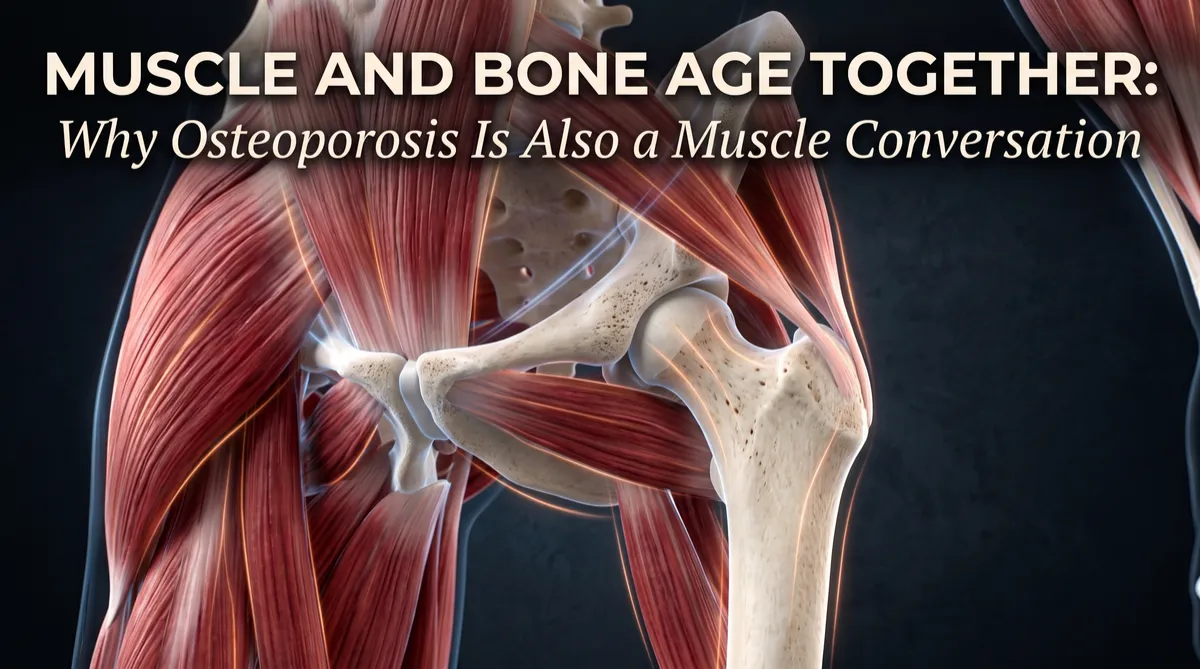
Muscle and Bone Age Together: Why Osteoporosis Is Also a Muscle Conversation
Osteoporosis is usually discussed as a disease of bone. Sarcopenia is usually discussed as a loss of muscle. Clinically, separating the two makes sense for diagnosis and treatment, but from a physical performance perspective, bone and muscle are closely connected.
Muscle generates force. Tendons transmit that force to bone. Bone adapts to mechanical loading. Muscle strength contributes to balance, mobility, and the ability to recover from a loss of balance before it becomes a fall.
As we age, changes can occur in both systems. Bone mineral density can decline while skeletal muscle mass, strength, and physical performance may also decrease. When poor bone health and impaired muscle health occur together, the consequences can become particularly important because fracture risk is influenced by more than the strength of the bone itself.
A fracture requires a vulnerable bone, but in many cases it also requires a fall.
That makes muscle relevant to the osteoporosis conversation.
What Is Osteoporosis?
Osteoporosis is a skeletal disorder characterized by reduced bone strength and an increased risk of fracture. Bone mineral density is an important component of evaluating osteoporosis, commonly assessed using dual energy X ray absorptiometry, or DXA.
Osteoporosis becomes more common with age and is particularly important after menopause, although it affects both women and men.
Hip fractures, vertebral fractures, and other fragility fractures can have significant consequences for mobility and independence. This is why identifying osteoporosis and appropriately managing fracture risk requires medical evaluation.
Bone mineral density, however, is only one part of the broader physical picture.
A person's likelihood of sustaining a fracture can also be influenced by whether they fall, how effectively they move, their balance, their strength, and their overall physical capacity.
This is where muscle becomes particularly relevant.
What Happens to Muscle as We Age?
Age related changes in skeletal muscle can include reductions in muscle mass, strength, and physical performance.
The term sarcopenia describes clinically important deterioration in muscle health associated with aging and other factors. Modern definitions of sarcopenia increasingly emphasize that muscle strength and physical performance are important alongside measurements of muscle quantity.
This distinction matters because having muscle and being able to use it effectively are not exactly the same thing.
Muscle mass can provide useful information about body composition. Strength provides information about force production. Balance and functional testing provide additional information about how someone performs in the real world.
When evaluating healthy aging, each contributes a different part of the picture.
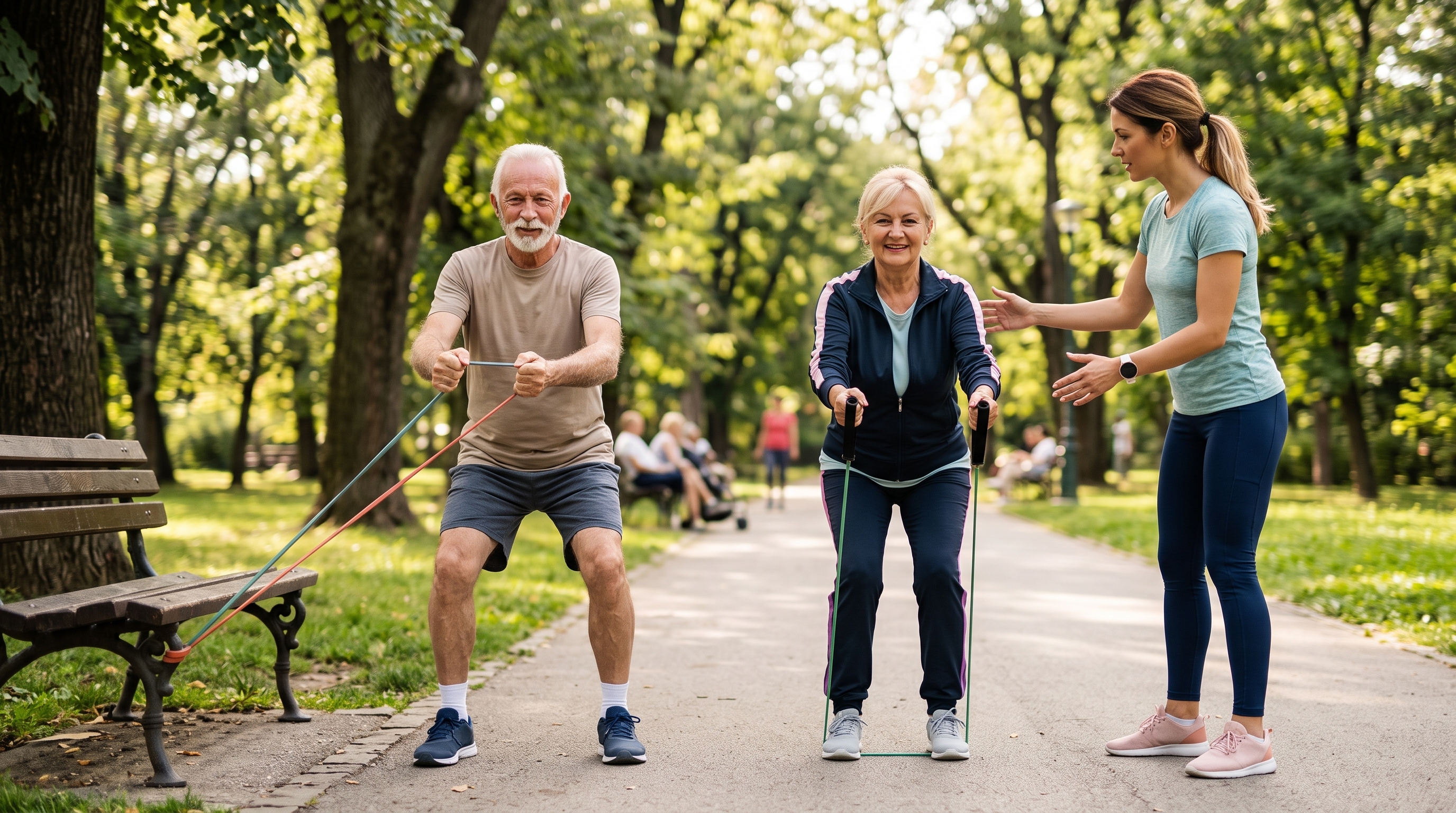
Bone and Muscle Function as a System
Bone is sometimes described as though it were a static structure that simply becomes thinner with age. In reality, bone is biologically active tissue that continually responds to mechanical and metabolic signals.
Mechanical loading is one of those signals.
When muscles contract, they generate forces that are transmitted to the skeleton. Weight bearing activity and resistance exercise also expose bone to mechanical forces.
This relationship is one reason muscle and bone health are often interconnected.
A person who becomes increasingly sedentary may experience less mechanical loading while also losing strength and muscle. Conversely, appropriately prescribed resistance and weight bearing exercise can provide stimuli relevant to both muscle and bone.
This does not mean that building muscle automatically treats osteoporosis. Osteoporosis is a medical condition, and treatment decisions may include medications, nutritional considerations, evaluation of secondary causes, and other interventions determined by an appropriate healthcare professional.
It does mean that maintaining physical capacity deserves attention alongside bone density.
Osteosarcopenia: When Bone and Muscle Decline Together
Researchers increasingly use the term osteosarcopenia to describe the coexistence of osteoporosis or osteopenia with sarcopenia.
The concept is clinically useful because the combination may identify individuals dealing with deterioration in two interconnected components of the musculoskeletal system.
Someone with low bone density but excellent strength, balance, and mobility may have a different physical risk profile than someone with low bone density who also has low muscle mass, poor strength, and impaired balance.
Both may require appropriate medical management of bone health, but their physical capacity is different.
This is why focusing exclusively on a bone density score can leave important questions unanswered.
How much muscle is present?
How strong is that muscle?
How well does the person move?
How is their balance?
Are those measurements changing over time?
Those questions become increasingly relevant as maintaining independence becomes a central goal of healthy aging.
The Connection Between Muscle, Falls, and Fractures
One of the most practical reasons muscle matters in osteoporosis is fall risk.
Not every fall results in a fracture, and not every fracture is caused by a fall. However, falls are a major contributor to fractures in older adults, particularly hip fractures.
Muscle strength and physical function contribute to our ability to stand, walk, climb stairs, change direction, stabilize the body, and respond when balance is disrupted.
When strength and physical function decline, avoiding or recovering from a fall may become more difficult.
This creates two related but distinct objectives.
The first is improving or preserving bone health.
The second is maintaining enough physical capacity to reduce the likelihood and consequences of falls.
A comprehensive approach to healthy aging should recognize both.
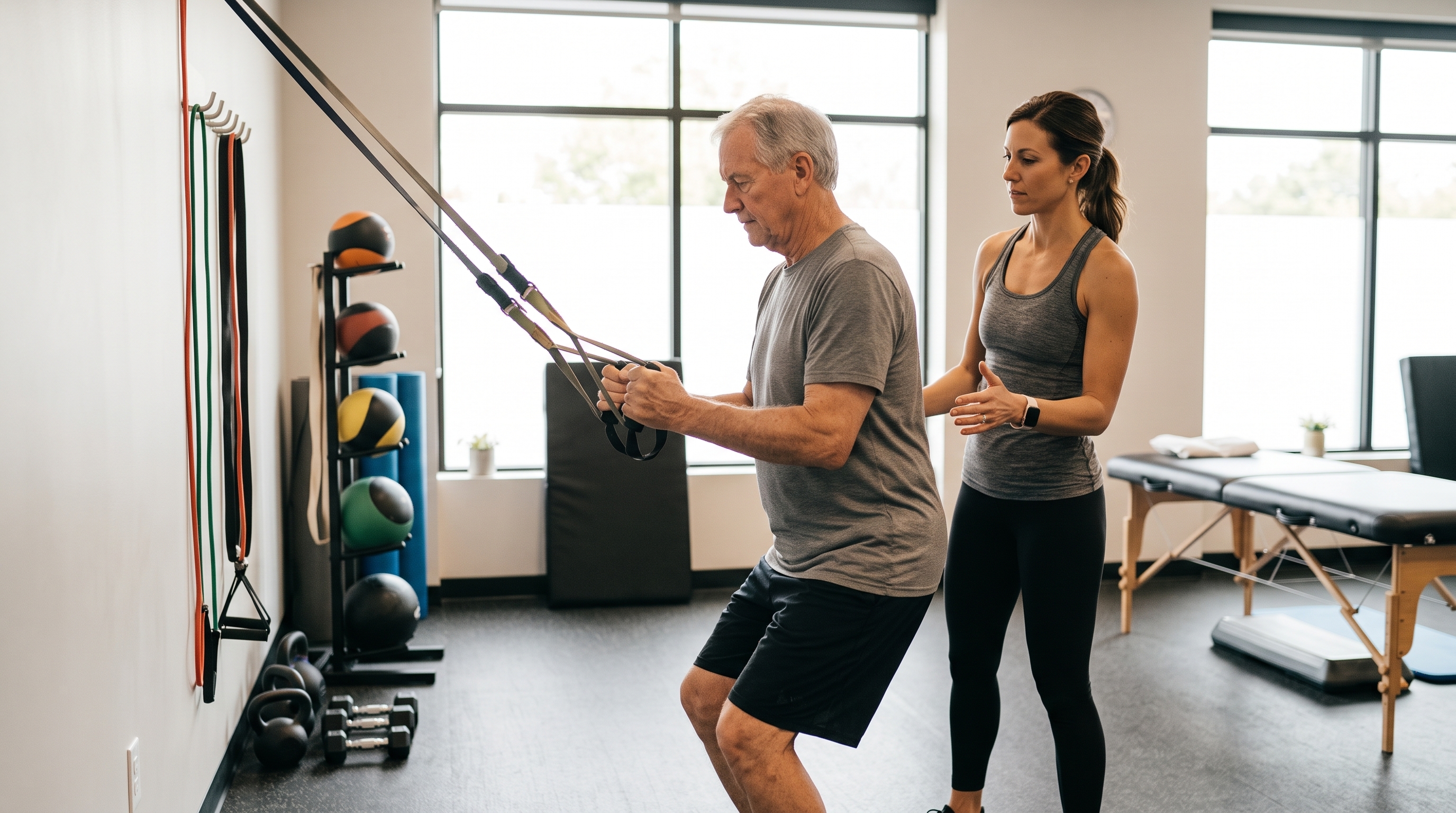
Resistance Training Deserves a Place in the Conversation
Resistance exercise is one of the most important tools available for maintaining and improving muscle strength with age.
Research also supports a role for appropriately designed resistance and weight bearing exercise in bone health. The response of bone depends on factors including the magnitude, rate, direction, and frequency of mechanical loading, as well as the individual's age, health status, training history, and baseline bone health.
This is important because not every exercise program provides the same stimulus.
Walking has many health benefits, but walking alone is not equivalent to progressive resistance training for maintaining strength and muscle. Likewise, simply being active does not necessarily provide the loading stimulus required to meaningfully challenge the musculoskeletal system.
For individuals with osteoporosis or elevated fracture risk, exercise selection also requires appropriate consideration of safety. Certain movements or loading strategies may not be appropriate for every person, particularly in the presence of vertebral fractures, significant osteoporosis, balance impairment, or other medical conditions.
The answer is not to avoid physical loading altogether. It is to use an appropriately designed approach based on the individual.
Muscle Mass Is Important, but Strength Matters Too
At Longevity Gyms, we place considerable emphasis on skeletal muscle because muscle is one of the physical assets we want to preserve across the lifespan.
However, measuring muscle mass is not the same as measuring muscle health in its entirety.
Someone can have a relatively favorable amount of skeletal muscle but inadequate strength. Another person may have less measured muscle while maintaining relatively good functional performance.
This is why body composition should be considered alongside other measures of physical capacity.
An InBody assessment can provide information about skeletal muscle mass and its distribution throughout the body. That gives us an objective body composition baseline.
It does not diagnose osteoporosis, measure bone mineral density for the diagnosis of osteoporosis, or replace DXA.
The distinction is important.
DXA and appropriate medical evaluation address the bone side of the clinical question. Body composition and physical performance assessments can help us better understand the muscle and capacity side.
Muscle Matters Before Osteoporosis Develops
The conversation about muscle should not begin at age 70 or after a diagnosis of osteoporosis.
Peak bone mass is largely established earlier in life, while muscle mass and strength can change substantially throughout adulthood. Physical inactivity, prolonged periods of caloric restriction, illness, hormonal changes, and aging can all influence the musculoskeletal system.
This makes muscle preservation relevant across adulthood.
For someone in their forties or fifties, measuring skeletal muscle may not feel as urgent as monitoring weight or cholesterol. Yet this is precisely the period when maintaining or building physical capacity can become increasingly important.
Waiting until significant muscle and strength have already been lost makes the problem harder.
The objective is not to maximize muscle mass indefinitely. It is to maintain enough muscle and strength to support the demands of life now and as those demands change with age.
Weight Loss Adds Another Consideration
This discussion also connects directly with modern weight management.
Significant weight loss can involve reductions in both fat and lean tissue. With the increased use of GLP 1 based therapies, more people are achieving substantial reductions in body weight, which can provide important health benefits for appropriately selected patients.
At the same time, monitoring skeletal muscle becomes particularly relevant.
For an adult already approaching an age when muscle and bone deserve greater attention, substantial weight loss without any awareness of body composition leaves an important variable unmeasured.
This does not make weight loss undesirable or GLP 1 therapy problematic. It means successful weight management and muscle preservation should not be treated as competing objectives.
We can care about both.
Why Longevity Gyms Measures Muscle
At Longevity Gyms, we use InBody body composition analysis to establish objective measurements related to skeletal muscle, body fat, visceral fat, and the distribution of lean mass throughout the body.
For someone interested in healthy aging, this gives us information a conventional scale cannot provide.
The question is not simply whether body weight is increasing or decreasing. We want to understand whether skeletal muscle is being maintained and how body composition changes over time.
This is particularly relevant for adults who are losing significant weight, beginning resistance training, returning to exercise after a prolonged period of inactivity, or simply trying to preserve physical capacity as they age.
Muscle is measurable, and unlike chronological age, it is also something we can actively train.
Bone Health Requires Medical Evaluation
It is important to be clear about what Longevity Gyms testing does and does not provide.
InBody does not diagnose osteoporosis.
If osteoporosis, osteopenia, fracture risk, or another bone disorder is suspected, appropriate medical evaluation is necessary. This may include DXA testing, clinical risk assessment, laboratory evaluation, medication review, and treatment when indicated.
Body composition provides different information.
It allows us to examine skeletal muscle and other components of body composition that contribute to the broader picture of physical capacity.
These measurements complement the conversation around healthy aging. They do not replace medical evaluation of bone disease.
Building a More Capable Body Over Time
The goal of preserving muscle is not simply to produce a better body composition report.
It is to support physical capability.
Strength helps us stand up from a chair, carry groceries, climb stairs, lift objects, travel, exercise, and recover when balance is challenged. Those abilities can be easy to take for granted until they begin to decline.
Bone health matters because we want a skeleton capable of tolerating the demands placed on it. Muscle matters because it helps create, control, and respond to those demands.
For healthy aging, both deserve attention.
Measure. Match. Re Measure.
At Longevity Gyms, our approach begins with establishing a baseline.
Body composition allows us to measure skeletal muscle rather than assuming it is adequate based on appearance, body weight, or BMI. That information can then be considered alongside an individual's goals, physical activity, and other measures of performance.
Repeat testing provides an opportunity to see whether muscle mass is being maintained or changing over time.
The objective is straightforward: understand the physical assets you have today and pay attention to the ones you want to preserve for the future.
For muscle, that means measuring it, using it, and giving it a reason to remain.
Start With Your Muscle Baseline
If you are interested in understanding your skeletal muscle mass, body composition, and how those measurements change over time, InBody testing at Longevity Gyms provides an objective place to start.
EXPLORE INBODY BODY COMPOSITION TESTING
Ready to begin your Longevity Gyms experience?
Explore testing, performance, recovery, and optimization at Longevity Gyms.
Medical Disclaimer
This article is provided for educational and informational purposes only and is not intended to provide medical advice, diagnosis, or treatment. Osteoporosis, osteopenia, sarcopenia, fracture risk, and other musculoskeletal conditions require individualized evaluation by an appropriately qualified healthcare professional. Consult a healthcare professional before beginning or substantially changing an exercise program if you have osteoporosis, a history of fragility fracture, significant balance impairment, or another medical condition. Longevity Gyms testing and services are not substitutes for individualized medical care.
Selected References
Cruz Jentoft AJ, Bahat G, Bauer J, et al. Sarcopenia: Revised European Consensus on Definition and Diagnosis. Age and Ageing. 2019;48(1):16 to 31.
Kirk B, Zanker J, Duque G. Osteosarcopenia: Epidemiology, Diagnosis, and Treatment. Journal of the American Medical Directors Association. 2020;21(6):747 to 755.
Giangregorio LM, McGill S, Wark JD, et al. Too Fit To Fracture: Exercise Recommendations for Individuals With Osteoporosis or Osteoporotic Vertebral Fracture. Osteoporosis International. 2014;25:821 to 835.
Watson SL, Weeks BK, Weis LJ, Harding AT, Horan SA, Beck BR. High Intensity Resistance and Impact Training Improves Bone Mineral Density and Physical Function in Postmenopausal Women With Low Bone Mass: The LIFTMOR Randomized Controlled Trial. Journal of Bone and Mineral Research. 2018;33(2):211 to 220.
Compston JE, McClung MR, Leslie WD. Osteoporosis. The Lancet. 2019;393(10169):364 to 376.
