
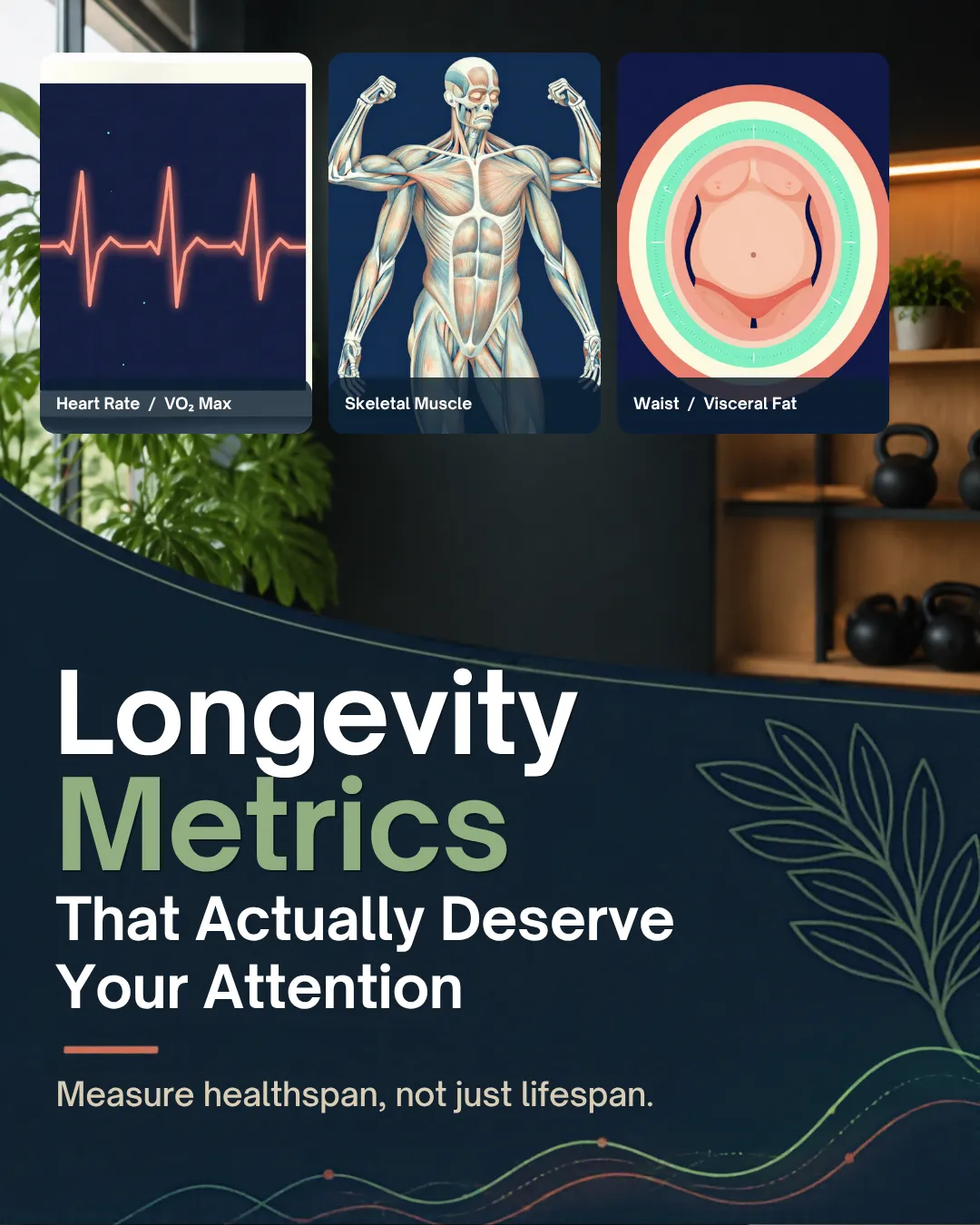
The Longevity Metrics That Actually Deserve Your Attention
Longevity has become increasingly data driven. It is now possible to measure hundreds of biomarkers, generate biological age estimates, continuously track sleep and heart rate, sequence genetic information, monitor glucose, and receive increasingly sophisticated health data from a watch.
More information can be useful, but the number of measurements available has created a different problem. We can collect enormous amounts of data without necessarily answering a basic question: What can your body actually do?
Can your cardiovascular system meet increasing physical demand? How much skeletal muscle are you carrying? What is your body composition? Can you maintain strength and mobility as you age? How efficiently do you perform at different exercise intensities?
These are questions about physical capacity.
At Longevity Gyms, we believe they deserve a more prominent place in the longevity conversation.
There Is No Single Longevity Score
The search for one number that summarizes health is understandable. A single score is easy to interpret, compare, and track.
Human physiology is considerably more complicated.
VO₂ max provides information about cardiorespiratory fitness. Body composition provides information about muscle and fat. Lactate testing provides information about metabolic responses to increasing exercise intensity. Resting metabolic rate provides information about energy expenditure at rest.
Each measurement answers a different question.
None of them independently tells us how long someone will live, and combining more measurements does not automatically create a perfect prediction.
The value of testing comes from selecting measurements that answer useful questions and understanding what those measurements actually represent.
VO₂ Max: How Much Aerobic Capacity Do You Have?
VO₂ max measures maximal oxygen consumption during progressively demanding exercise and provides an objective measure of cardiorespiratory fitness.
Its relevance to long term health is supported by a substantial body of research. Higher cardiorespiratory fitness has consistently been associated with lower all cause mortality and cardiovascular risk across large observational studies.
A meta analysis published in JAMA found that each additional 1 MET of maximal aerobic capacity was associated with approximately a 13 percent lower risk of all cause mortality and a 15 percent lower risk of cardiovascular disease or coronary heart disease events.
A later study involving more than 120,000 adults similarly found a strong inverse association between cardiorespiratory fitness and long term mortality.
These findings do not mean that VO₂ max predicts exactly how long someone will live. They do demonstrate why cardiorespiratory fitness deserves attention as an objective measure of physical capacity.
There is another reason we find it valuable: cardiorespiratory fitness can be trained.
A VO₂ max measurement can establish a baseline. Training can occur. The measurement can then be repeated to determine whether aerobic capacity actually changed.
That makes the number useful beyond simply knowing it.
Skeletal Muscle: How Much Are You Carrying?
Muscle is another physical asset that deserves considerably more attention in longevity.
Skeletal muscle supports movement, strength, mobility, glucose metabolism, balance, and physical function. With aging, reductions in muscle strength, mass, and performance can contribute to sarcopenia and declining physical capacity.
This is particularly relevant during significant weight loss.
With the rise of GLP 1 based therapies, many people can now achieve substantial weight reduction with medically appropriate treatment. These medications can be excellent tools, but their success also creates a reason to measure more than total pounds lost.
Significant weight loss can involve changes in both fat and lean tissue. If someone loses 30 pounds, the scale cannot tell us what happened to skeletal muscle along the way.
Body composition analysis provides additional information.
At Longevity Gyms, this is one reason we place significant emphasis on measuring skeletal muscle. If body weight is changing substantially, we want muscle to remain part of the conversation.
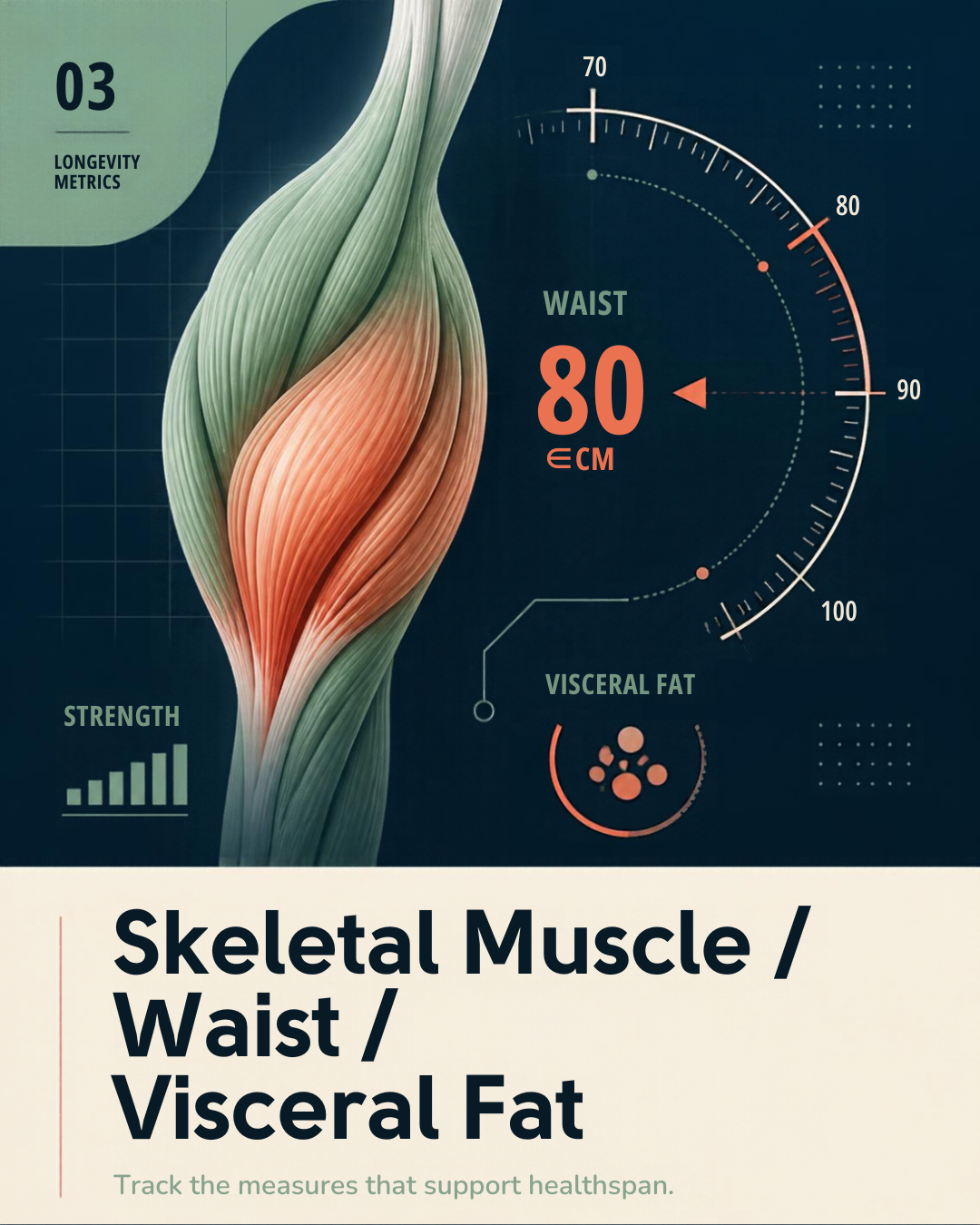
Body Fat and Visceral Fat: Weight Does Not Tell the Entire Story
Total body weight is useful, but it does not distinguish between muscle and fat. BMI adds information by relating weight to height, but it also does not directly measure body composition.
Body fat provides another layer of information, and fat distribution matters as well.
Visceral adipose tissue is located within the abdominal cavity around internal organs. Greater visceral adiposity has been associated with insulin resistance, cardiometabolic disease, and adverse cardiovascular outcomes.
This means two people with the same weight or BMI can have substantially different body compositions and patterns of fat distribution.
The objective is not to replace weight or BMI. It is to understand their limitations.
If we want to know someone's body weight, use a scale. If we want to better understand the distribution of muscle and fat behind that number, body composition testing answers a different question.
Resting Metabolic Rate: What Does Your Body Require at Rest?
Resting metabolic rate, or RMR, represents the energy required to support basic physiological functions at rest.
It accounts for a substantial portion of total daily energy expenditure.
RMR is influenced by several factors, including body size, body composition, age, sex, genetics, and physiological state. Fat free mass is particularly important because metabolically active tissues contribute substantially to resting energy expenditure.
Many calorie calculators estimate resting energy needs using population based equations. These estimates can be useful, but they are still estimates.
Indirect calorimetry provides an opportunity to measure resting energy expenditure using respiratory gas exchange.
For someone trying to better understand energy requirements, weight management, or metabolic physiology, measured RMR can provide a more individualized baseline than relying exclusively on an equation.
It does not determine exactly how many calories someone should eat. Nutrition requirements depend on activity, goals, medical considerations, and other factors.
It answers a more specific question: approximately how much energy is the body using at rest under the conditions of the test?
Lactate: How Does Your Metabolism Respond as Intensity Increases?
For athletes, maximal aerobic capacity is only part of the performance picture.
Two athletes can have similar VO₂ max values while performing differently at submaximal workloads.
Blood lactate testing can help characterize this difference.
During a graded exercise test, lactate can be measured as workload progressively increases. The resulting lactate curve provides information about how the athlete's metabolic response changes with intensity.
This can help identify physiological transition points and provide more individualized context for heart rate, pace, speed, or power based training zones.
For an endurance athlete, this information may be more useful than relying exclusively on age based heart rate formulas or generic training zones.
VO₂ max and lactate testing therefore answer complementary questions. VO₂ max helps quantify maximal aerobic capacity, while lactate testing provides information about what happens metabolically on the way there.
Strength: Muscle Mass Is Not Enough
Measuring skeletal muscle is important, but muscle quantity and muscle function are not interchangeable.
A person can carry a substantial amount of muscle without demonstrating exceptional strength. Conversely, two people with similar measured muscle mass can have different functional abilities.
This distinction becomes increasingly important with age.
Modern definitions of sarcopenia emphasize muscle strength and physical performance alongside muscle quantity because physical capability depends on more than the amount of tissue present.
This means the longevity conversation should not stop at preserving muscle mass.
We also need to use it.
Resistance training provides a direct stimulus to skeletal muscle and supports improvements in strength and physical function. Appropriately designed exercise also provides mechanical loading to bone, connecting muscle preservation with the broader goal of maintaining musculoskeletal capacity.
Mobility: Can You Use the Capacity You Have?
Aerobic capacity and muscle mass mean less if physical movement becomes increasingly restricted.
Mobility involves the ability to move effectively through the demands of daily life. It reflects contributions from strength, balance, joint function, neuromuscular control, flexibility, and other factors.
This becomes particularly relevant when thinking about healthy aging.
The objective is not simply to accumulate favorable laboratory values while physical capability declines.
Walking, standing from a chair, climbing stairs, carrying objects, exercising, traveling, and responding to a loss of balance are practical expressions of physical capacity.
Maintaining those abilities requires more than one metric.
More Data Is Not Necessarily Better Data
The longevity industry has become very good at generating information.
That does not mean every available measurement needs to be performed on every person.
A useful test should answer a question.
If we measure VO₂ max, we should understand why aerobic capacity matters and what we intend to do with the result.
If we measure skeletal muscle, we should understand why muscle is relevant to the person's goals and whether we intend to monitor it over time.
If we perform lactate testing, there should be a performance question that the data can help answer.
If we measure resting metabolic rate, we should understand how that information fits into the larger picture of energy expenditure.
Testing without a purpose can create impressive reports without producing useful decisions.
The objective should be better information, not simply more information.
What About Blood Biomarkers?
Blood testing remains an important component of medicine and can provide information that physical performance testing cannot.
Lipids, glucose regulation, inflammatory markers, hormones, renal function, liver function, hematologic parameters, and other laboratory measurements can be clinically important depending on the individual.
The point is not that performance testing should replace medical evaluation or laboratory testing.
It should not.
The point is that a laboratory report and a physical performance assessment answer fundamentally different questions.
Someone can have an extensive panel of blood biomarkers without ever objectively measuring cardiorespiratory fitness, skeletal muscle, or physical performance.
For a longevity strategy concerned with maintaining capability over decades, both sides of that equation can matter.
Longevity Should Include Capacity
There is an understandable tendency to think about longevity primarily in terms of disease prevention.
That is important, but living longer and remaining physically capable are not identical outcomes.
A person may care about being able to travel in their seventies, continue playing a sport, carry grandchildren, climb stairs comfortably, maintain independence, or simply continue doing the activities they enjoy.
Those goals depend heavily on physical capacity.
Cardiorespiratory fitness matters.
Muscle matters.
Strength matters.
Mobility matters.
Body composition matters.
Metabolic fitness matters.
No single measurement captures all of them, which is precisely why a more comprehensive view of performance can be useful.
Why Longevity Gyms Starts With Testing
Longevity Gyms was designed around the idea that performance and longevity services should begin with a better understanding of the individual.
Rather than selecting technologies simply because they are popular, testing can help establish where someone currently stands.
VO₂ max can establish aerobic capacity.
InBody can provide information about skeletal muscle and body composition.
RMR testing can measure resting energy expenditure.
Lactate testing can provide additional performance information for athletes who want greater precision around training intensity.
These measurements are not intended to produce a single longevity score.
They provide different pieces of information about the body that can be used in context.
That is the foundation of our approach.
Measure. Match. Re Measure.
At Longevity Gyms, testing is not the end point.
We use a simple framework:
Measure. Match. Re measure.
Measure the relevant components of current physical capacity.
Match services and performance strategies to the individual's goals and baseline.
Re measure appropriate metrics over time to determine whether something actually changed.
Not every person needs every test, and not every metric needs to be optimized.
The objective is to identify measurements that are meaningful to the person standing in front of us and use those measurements with purpose.
There are hundreds of numbers we could collect.
We are particularly interested in the ones that help us understand what your body can do today and whether that capacity is changing.
Start With Your Baseline
If you are interested in understanding your current physical capacity, Longevity Gyms testing can help establish an objective starting point.
Explore VO₂ max, body composition, resting metabolic rate, and performance testing to determine which assessments align with your goals.
EXPLORE TESTING AND ASSESSMENTS
Ready to begin?
Learn more about the Longevity Gyms approach to testing, performance, recovery, and optimization.
Medical Disclaimer
This article is provided for educational and informational purposes only and is not intended to provide medical advice, diagnosis, or treatment. The measurements and assessments discussed provide specific information about physical performance, metabolism, or body composition and should not be interpreted as comprehensive assessments of an individual's health or disease risk. Consult an appropriately qualified healthcare professional regarding personal medical concerns, symptoms, diagnoses, medications, or treatment decisions. Longevity Gyms testing and services are not substitutes for individualized medical care.
Selected References
Ross R, Blair SN, Arena R, et al. Importance of Assessing Cardiorespiratory Fitness in Clinical Practice: A Case for Fitness as a Clinical Vital Sign. Circulation. 2016;134:e653 to e699.
Mandsager K, Harb S, Cremer P, et al. Association of Cardiorespiratory Fitness With Long Term Mortality Among Adults Undergoing Exercise Treadmill Testing. JAMA Network Open. 2018;1(6):e183605.
Kodama S, Saito K, Tanaka S, et al. Cardiorespiratory Fitness as a Quantitative Predictor of All Cause Mortality and Cardiovascular Events in Healthy Men and Women. JAMA. 2009;301(19):2024 to 2035.
Cruz Jentoft AJ, Bahat G, Bauer J, et al. Sarcopenia: Revised European Consensus on Definition and Diagnosis. Age and Ageing. 2019;48(1):16 to 31.
Neeland IJ, Ross R, Després JP, et al. Visceral and Ectopic Fat, Atherosclerosis, and Cardiometabolic Disease. Lancet Diabetes & Endocrinology. 2019;7(9):715 to 725.
Brooks GA. The Science and Translation of Lactate Shuttle Theory. Cell Metabolism. 2018;27(4):757 to 785.
Faude O, Kindermann W, Meyer T. Lactate Threshold Concepts: How Valid Are They? Sports Medicine. 2009;39(6):469 to 490.
