
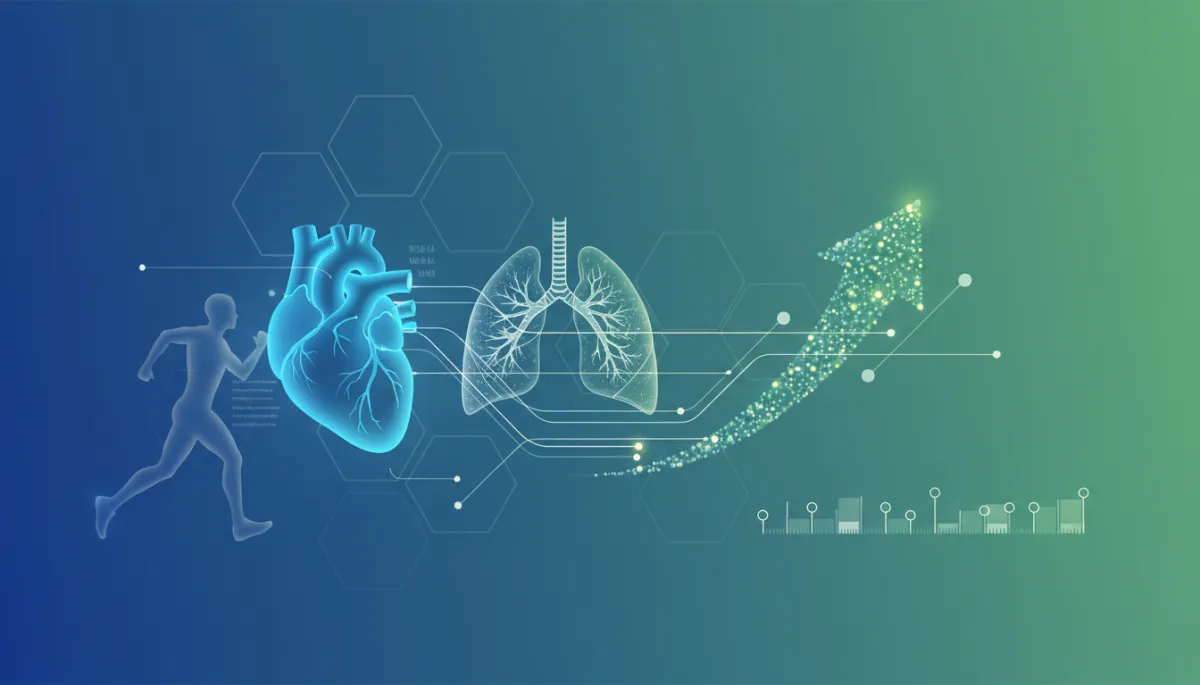
VO2 Max: Key to Longevity and Fitness
Longevity, Cardiovascular Fitness, VO2 Max
VO2 Max: Is It Really One of the Greatest Predictors of Longevity?
VO2 max has moved from an obscure laboratory metric to a headline number on wearables and fitness apps. It is often described as one of the strongest predictors of how long—and how well—you will live. At Longevity Gyms | Biological Upgrade Performance Center, we see VO2 max as a powerful, but not standalone, tool for understanding and improving your long-term physical capacity. This article explains what VO2 max actually measures, why it matters for aging, how you can improve it, and how to integrate it intelligently into a broader health and performance strategy.
What VO2 Max Actually Measures
VO2 max stands for “maximal oxygen uptake.” In practical terms, it is the highest rate at which your body can take in, transport, and use oxygen during intense exercise. It is usually expressed as milliliters of oxygen per kilogram of body weight per minute (ml/kg/min).
Oxygen is the fuel that powers aerobic energy production. When you walk, climb stairs, or perform any sustained activity, your muscles require a continuous supply of oxygen. VO2 max reflects the combined performance of multiple systems:
Heart: how much blood your heart can pump each minute (cardiac output).
Lungs: how efficiently you move oxygen from the air into your bloodstream.
Blood vessels: how well your circulation delivers oxygen to working muscles.
Muscles and mitochondria: how effectively your cells use that oxygen to create energy.
Because VO2 max sits at the intersection of these systems, it is not just a “fitness number.” It is a compact summary of cardiovascular, pulmonary, and metabolic capacity—exactly the capabilities that often decline with age and chronic disease.
Why VO2 Max Matters in Longevity Science
Large epidemiological studies consistently show a strong relationship between cardiorespiratory fitness and survival. When researchers stratify people by VO2 max or similar fitness measures, those in higher fitness categories tend to live longer and experience fewer cardiovascular events than those in lower categories, even after adjusting for age, smoking, and other risk factors.
From a longevity standpoint, VO2 max is compelling for several reasons:
It captures functional reserve—how much capacity you have beyond the minimum required to get through your day. More reserve means more resilience to stress, illness, and surgery.
It predicts not only lifespan (how long you live) but also aspects of healthspan (how capable you remain while you are alive).
It is modifiable. Unlike your genetics, you can meaningfully shift your VO2 max with targeted training, even later in life.
This does not mean VO2 max is the only—or even the single greatest—predictor of longevity in every context. But among measurable, trainable variables, it is consistently one of the strongest. At Longevity Gyms, we treat it as a central pillar in a broader capability profile, not as a magic number that tells the whole story on its own.
Exercise Behavior vs. Physiological Fitness: Why the Distinction Matters
Many people equate “I exercise regularly” with “I am fit.” Those are not the same thing. Exercise behavior describes what you do—steps, classes, runs, rides. Physiological fitness describes what your body can actually deliver—your capacity. VO2 max is one way to quantify that capacity objectively.
Two people might both report working out five days per week:
One walks at a comfortable pace, rarely breathing hard, and never increases intensity.
The other includes structured intervals, progressive overload, and sessions that approach their limits.
Their exercise behavior looks similar on paper, but their VO2 max values—and their underlying cardiovascular adaptations—can be dramatically different. The first person is active, which has its own benefits. The second person is actively training their physiology to adapt and improve. For longevity, both movement and capacity matter, but VO2 max specifically reflects the latter.
💡 Key Point: Steps and streaks are useful behavior metrics. VO2 max is a capability metric. For long-term independence, you need both.
How VO2 Max Is Measured: Direct Testing vs. Wearable Estimates
There are two main ways people encounter VO2 max today: direct measurement in a lab or performance center, and estimation from wearables. Understanding the difference is essential if you want to use VO2 max as a serious health metric rather than just a gadget number.
Direct VO2 Max Testing
A direct VO2 max test is typically performed on a treadmill or cycle ergometer while you wear a mask connected to a metabolic cart. The workload increases stepwise or continuously until you reach true maximal effort or a clinically appropriate stopping point. The system measures the volume of air you inhale and exhale and the concentration of oxygen and carbon dioxide, allowing precise calculation of your oxygen uptake at each stage and at your maximum.
Done properly, this is the gold standard. It provides more than a single VO2 max value. It can reveal ventilatory thresholds, efficiency, and heart rate responses that inform training zones and even medical decision-making. In a longevity-focused environment like Longevity Gyms, this level of detail helps us design truly individualized cardiovascular protocols rather than guessing intensity from generic formulas.
Wearable VO2 Max Estimates: Helpful, but Limited
Most modern watches and fitness trackers estimate VO2 max based on algorithms that use your age, sex, heart rate response, and pace or power during certain activities. These estimates can be directionally useful, especially if you track them over time under similar conditions. However, they have important limitations:
They assume typical movement patterns and may be less accurate for non-runners, older adults, or those with gait or heart rate irregularities.
They are influenced by GPS quality, wrist-based heart rate accuracy, and the specific algorithm of each brand.
They provide limited insight into underlying physiology beyond the single estimated number.
For many people, wearable VO2 max is a good starting point to increase awareness and motivate training. But if you are making significant health decisions, preparing for surgery, or building a serious longevity strategy, a direct test provides a far more reliable baseline. At Longevity Gyms, we view wearables as complementary tools, not replacements for high-quality assessment when it truly matters.
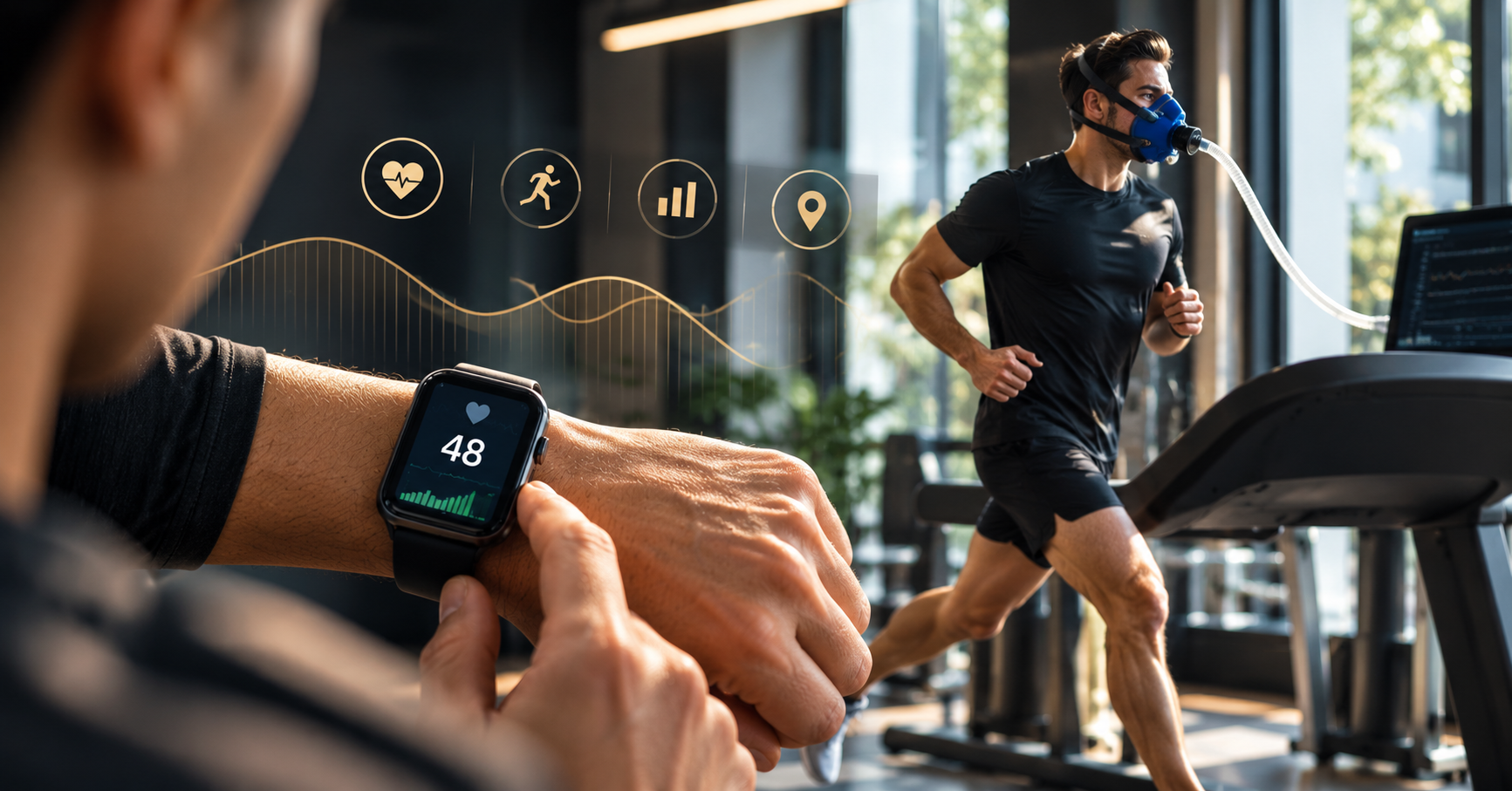
Direct VO2 max testing turns abstract fitness into actionable, individualized training data.
How VO2 Max Can Be Improved Through Training
The encouraging news is that VO2 max is trainable across a wide age range. While genetics and age set boundaries, most adults—especially those who are deconditioned or only moderately fit—can make meaningful improvements with structured training. The key is to move beyond casual activity into intentionally designed cardiovascular work that challenges your system enough to adapt.
Foundational Aerobic Work: Building the Base
A strong aerobic base supports both VO2 max and everyday function. This usually means accumulating time in a moderate-intensity zone where you can still speak in full sentences, but your heart rate is clearly elevated. For many, this corresponds to brisk walking, easy jogging, cycling, or incline treadmill work. Consistently performing 150–300 minutes per week of this type of training can improve cardiac efficiency, capillary density, and mitochondrial function—all contributors to VO2 max and endurance.
Interval Training: Targeting the Ceiling
To specifically push VO2 max higher, you need periods of work that approach your current ceiling. This is where interval training becomes valuable. Classic VO2 max intervals involve efforts of 2–5 minutes at a very challenging intensity, separated by equal or slightly longer recovery periods. Shorter, high-intensity intervals (for example, 30 seconds hard, 2–4 minutes easy) can also be effective, especially for those newer to this style of training or with orthopedic constraints.
The specific protocol matters less than the principles:
The work intervals must be meaningfully harder than your usual steady-state exercise.
You need adequate recovery to repeat quality efforts without breaking down.
Total weekly dose should be progressive, not maximal from day one, especially if you are over 40 or have risk factors.
⚠️ Safety Note: Higher-intensity training is powerful but should be introduced thoughtfully, especially if you have cardiovascular risk factors or a long gap since your last vigorous exercise. Medical clearance and professional guidance are often appropriate.
Strength, Mobility, and Recovery: Indirect but Important
While VO2 max is primarily a cardiovascular metric, your ability to train it depends on the rest of your body. Adequate strength reduces joint stress and improves movement economy. Good mobility allows you to use equipment and positions that distribute load safely. Recovery practices—sleep, nutrition, and modalities such as contrast therapy or compression—help you absorb training and avoid overuse injuries. At Longevity Gyms, we deliberately integrate these elements so that VO2 max training is not isolated from the rest of your capability stack.
Baseline Testing and Re‑Measurement: Turning VO2 Max into a Strategy
A single VO2 max value is interesting. A series of VO2 max measurements over time is strategic. The difference is baseline and re-measurement. Without a clear starting point, it is impossible to know whether your training, lifestyle changes, or recovery investments are actually improving your physiological fitness or simply maintaining it—or, in some cases, allowing it to decline quietly in the background.
The Role of a True Baseline
Establishing a baseline VO2 max through direct testing provides several advantages:
It anchors your current capacity to your age, sex, and goals, helping you understand whether you are underperforming, on track, or already in a high-performing range.
It allows for personalized training zones rather than generic heart rate formulas, making your sessions more effective and safer.
It creates a clear reference point against which all future changes can be compared.
For many of our members at Longevity Gyms, the first VO2 max test is a reality check. Some discover they are fitter than they realized. Others, despite regular activity, see that their physiological capacity does not yet match their aspirations for aging well. Both outcomes are valuable because they inform what to do next.
Re‑Measurement: Feedback for the Long Game
VO2 max is not a one‑and‑done test. For longevity, the trend over years matters more than any single reading. Periodic re-measurement—often every 3–6 months, depending on goals and training intensity—allows you to:
Confirm that your current training approach is moving the needle.
Adjust volume and intensity when progress plateaus or life circumstances change.
Detect early declines that might signal overtraining, under‑recovery, or emerging health issues.
This feedback loop is central to our philosophy: the machine is not the strategy. VO2 max testing technology is only valuable if it informs decisions—how you structure your weeks, how you balance strength and conditioning, and how you protect your capacity over decades, not just for the next race or season.
VO2 Max in the Bigger Picture of Health and Aging
VO2 max is powerful, but it is not a complete health report. A person with a high VO2 max can still have concerning metabolic markers, elevated blood pressure, or limited strength and mobility. For an intelligent longevity strategy, VO2 max must sit alongside other metrics rather than replace them.
Integrating VO2 Max with Other Health Metrics
At Longevity Gyms, we look at VO2 max in the context of a broader capability and health profile, which may include:
Strength and power: grip strength, lower‑body strength, and power tests that predict fall risk, independence, and functional capacity.
Mobility and balance: joint range of motion and balance assessments that influence your ability to move safely and confidently.
Metabolic health: fasting glucose, insulin, lipid profile, body composition, and waist circumference that reflect how you process and store energy.
Blood pressure and heart rate: resting values and heart rate variability that indicate cardiovascular load and recovery status.
When VO2 max is interpreted alongside these metrics, patterns emerge. For example, a high VO2 max with poor strength suggests that conditioning is outpacing musculoskeletal robustness. A moderate VO2 max with excellent strength and metabolic health may support different training priorities than a similar VO2 max in someone with insulin resistance and low muscle mass. Integration turns data into direction.
Capability Over Lifespan: What VO2 Max Really Represents
Ultimately, VO2 max is valuable because it reflects your ability to do things that matter: hike with family, climb stairs without stopping, recover from illness, travel, and remain independent. It is less about chasing a specific ml/kg/min target and more about ensuring that your aerobic engine is strong enough to support the life you want to keep living—today and 20 years from now.
In that sense, VO2 max is one of the greatest practical predictors of longevity: not just how long you live, but how long you can keep showing up fully for the activities, roles, and relationships that define your life.
Bringing It All Together: A Credible Approach to VO2 Max and Longevity
VO2 max deserves its reputation as a major predictor of health and survival, but it must be understood in context. It measures the integrated performance of your heart, lungs, blood vessels, and muscles under stress. Higher values are consistently associated with lower risk of cardiovascular disease and all‑cause mortality. Yet VO2 max is not destiny, and it is not a standalone verdict on your health. It is a modifiable capability that responds to training, and it is most powerful when paired with other metrics and a clear plan of action.
For adults in their 30s through 70s who care about staying strong, mobile, and independent, the path forward is not mysterious, but it does require intention:
Measure a true baseline. Whenever possible, obtain a direct VO2 max test in a controlled environment with professionals who can interpret the data in the context of your health history and goals.
Design a targeted training plan. Combine foundational aerobic work, appropriately dosed intervals, and supportive strength, mobility, and recovery practices to improve your capacity safely.
Re‑measure and adjust. Reassess VO2 max periodically and refine your plan based on objective changes, not just how busy or “active” you feel.
Integrate with other metrics. Use VO2 max alongside strength, mobility, metabolic, and recovery markers to guide a balanced, long‑term strategy.
This is the philosophy behind Longevity Gyms | Biological Upgrade Performance Center. We do not chase single-number solutions or promise to reverse aging. Instead, we use credible measurements like VO2 max, interpreted through a scientific and practical lens, to help you build and preserve the capabilities that make your life possible and enjoyable.
📌 Key Takeaway: VO2 max is not just a fitness score—it is a measurable, trainable expression of your cardiovascular reserve and resilience. Used wisely, it becomes a cornerstone of a thoughtful longevity plan, not a vanity metric on a watch.
Start Your Upgrade: Making VO2 Max Part of Your Longevity Plan
If you are ready to move beyond generic exercise recommendations and fragmented health data, incorporating VO2 max testing into your routine is a practical next step. A structured assessment, followed by an intentional training plan and periodic re‑measurement, can transform VO2 max from an abstract number into a concrete tool for preserving your independence and performance as you age.
At Longevity Gyms, we integrate VO2 max testing with strength, mobility, metabolic, and recovery assessments to build Signature Circuits tailored to your current capacity and long‑term goals. The technology is advanced, but the objective is simple: help you build and maintain the physical capability to keep living the life you care about.
If you want to know—not guess—where your aerobic capacity stands today and how to improve it intelligently, we invite you to Start Your Upgrade. VO2 max is one of the clearest windows into your cardiovascular future. Used thoughtfully, it can help you make the next decade—not just the next workout—stronger, more resilient, and more capable.
References
Ross R, Blair SN, Arena R, et al. Importance of Assessing Cardiorespiratory Fitness in Clinical Practice: A Case for Fitness as a Clinical Vital Sign. Circulation. 2016;134(24):e653. doi:10.1161/CIR.0000000000000461
Mandsager K, Harb S, Cremer P, et al. Association of Cardiorespiratory Fitness With Long term Mortality Among Adults Undergoing Exercise Treadmill Testing. JAMA Network Open. 2018;1(6):e183605. doi:10.1001/jamanetworkopen.2018.3605
Kodama S, Saito K, Tanaka S, et al. Cardiorespiratory Fitness as a Quantitative Predictor of All Cause Mortality and Cardiovascular Events in Healthy Men and Women: A Meta analysis. JAMA. 2009;301(19):2024. doi:10.1001/jama.2009.681